
Biochemistry (1st Semester of Pharm D) (Written)
- DOCTOR OF PHARMACY (PHARM-D), Pharm-D Semester-I
- 123 (Registered)
-
(0 Review)
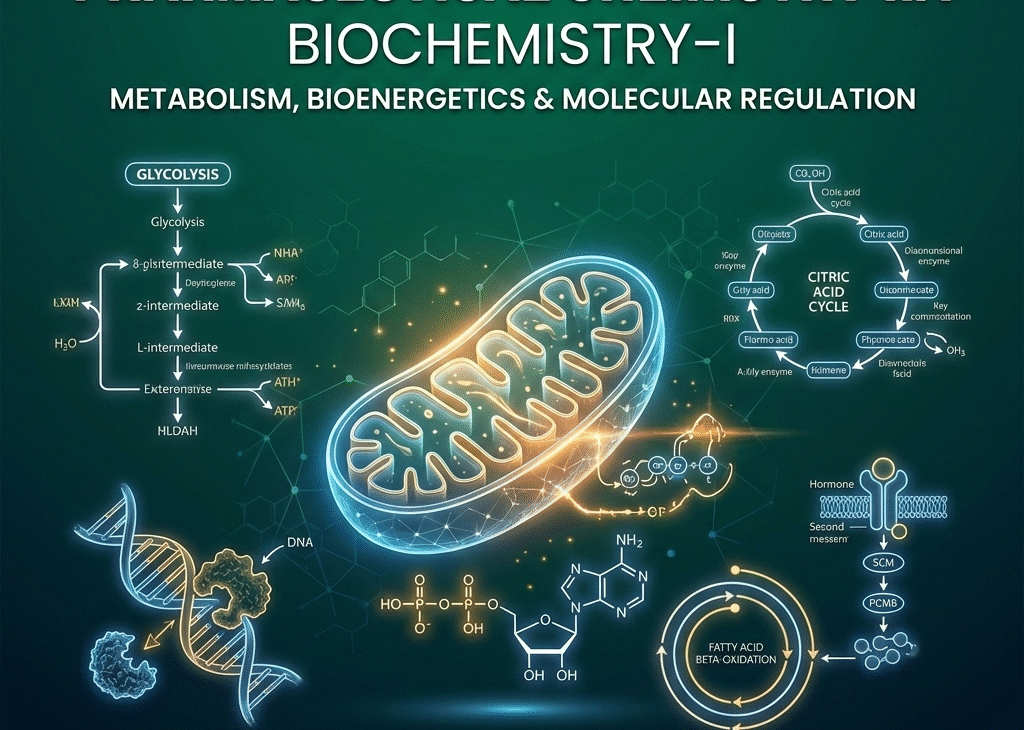

Biochemistry- Doctor of Pharmacy – First Semester
The first semester of the Pharm.D program lays a strong foundation in both basic and pharmaceutical sciences, integrating theoretical and practical knowledge essential for future clinical practice.
Theory Subjects:
Pharmaceutics-I (Physical Pharmacy)
Course Learning Outcomes:
At the end of this course the student will be able to:
1. Understand Pharmaceutical Biochemistry concepts and its role in pharmacy, including its medical and pharmaceutical applications.
2. Explain biochemical processes of carbohydrates, lipids, proteins, and nucleic acids, focusing on metabolism, disorders, and pharmaceutical relevance.
3. Analyze the role of enzymes, hormones, vitamins, and secondary messengers in metabolic regulation and their pharmaceutical applications.
4. Demonstrate proficiency in biochemical lab techniques, including analysis of biological samples and clinical chemistry tests with pharmaceutical focus.
Contents:
1. General introduction to Pharmaceutical Biochemistry: Role of Pharmaceutical Biochemistry in the Pharmacy Profession.
2. Biochemistry of Carbohydrates: Define carbohydrates, classification, isomerism, optical activity, structural representation of sugar molecules, chemical properties of carbohydrates, pharmaceutical importance. Carbohydrate digestion, absorption, metabolism and excretion, glycolysis dysregulations, feeder pathways of glycolysis, pentose phosphate pathway dysregulations, glucuronate pathway, glycogenolysis, glycogenesis, gluconeogenesis, citric acid cycle and dysregulation, energetics of various metabolic processes of carbohydrates. Brief overview of carbohydrate metabolic disorders.
3. Bioenergetics: Principles of bioenergetics, Electron transport chain and oxidative phosphorylation and disorders, reactive oxygen species generation and scavenging.
4. Biochemistry of Lipids: Define lipids, classifications (based on reactivity of lipids and based on complexity of structure), essential fatty acids, omega-3 fatty acids, eicosanoids, reactions of fatty acids and lipids, pharmaceutical importance. Lipids digestion, absorption, metabolism and excretion, oxidation of saturated and unsaturated, odd and even number fatty acids and dysregulation, Biosynthesis of fatty acids and dysregulation, cholesterol synthesis and its dysregulation, biosynthesis of neutral lipids, ketone bodies, energetics of various metabolic processes of lipids. Brief overview of lipid metabolic disorders.
5. Biochemistry of Vitamins: Vitamins, classification, structures, metabolic functions, physiological role, natural and synthetic sources, deficiencies and toxicities, pharmacological interactions of vitamins with drugs, pharmaceutical importance of vitamins.
6. Biochemistry of Hormones: Hormones, chemical classification, pharmaceutical importance of hormones.
Curriculum
- 1 Section
- 1 Lesson
- 2000 Days
- Biochemistry-I (PHARMACEUTICAL CHEMISTRY-II)1
Instructor

Related Courses
 Teacher
Pharmacist Tayyeb Official
Teacher
Pharmacist Tayyeb Official
 Teacher
Pharmacist Tayyeb Official
Teacher
Pharmacist Tayyeb Official
 Teacher
Pharmacist Tayyeb Official
Teacher
Pharmacist Tayyeb Official
 Teacher
Pharmacist Tayyeb Official
Teacher
Pharmacist Tayyeb Official
 Teacher
Pharmacist Tayyeb Official
Teacher
Pharmacist Tayyeb Official
 Teacher
Pharmacist Tayyeb Official
Teacher
Pharmacist Tayyeb Official